A domestic final is both a destination and a reference point — a chance to compete, and a chance to reflect on the path taken to get there.
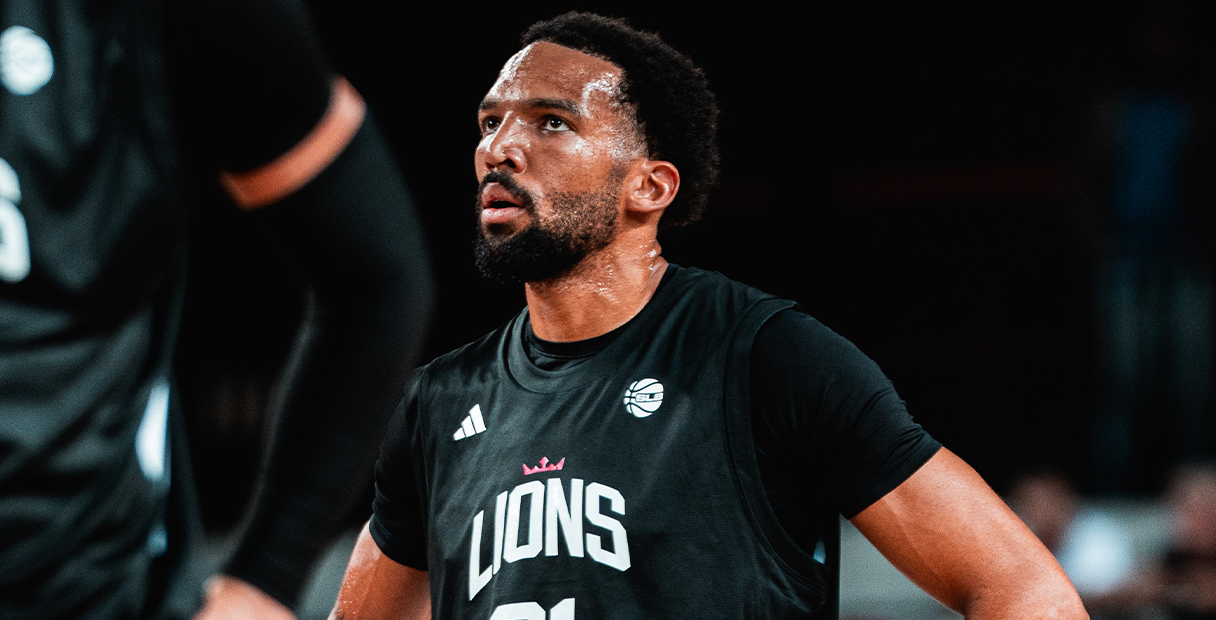
As the London Lions contest the Super League Basketball Trophy Final, 29-year-old Deane Williams does so as a product of British basketball’s evolution and a voice invested in where it goes next.
Williams’ relationship with the game began early, though not in a way that immediately suggested a professional career lay ahead.
Introduced to basketball through his father, who played for the Air Force team during his military service, the sport was initially part of family life rather than a fixed ambition.
“I started playing when I was five years old,” Williams says.
“My dad was in the military, and he played in the Air Force team through my childhood, so I would end up going to his games and meet other kids there whose dads were playing as well, so I just got into it that way.”
Like many young athletes, his focus shifted as he grew. Football became the priority for a time, before physical changes pulled him back toward the court.
“I stopped playing for a while, until I was 14, because I was playing football,” he explains.
“Then I ended up getting too big, too physical for that, so I just went back to basketball.”
That decision proved pivotal. Williams’ move to Bristol and the SGS Academy placed him in a more structured environment, accelerating his development and opening doors at regional and national level.
From there, opportunities followed quickly — representing England, Great Britain Under-20s, and ultimately earning a scholarship to play and study in the United States.
Throughout that journey, one influence remained constant.
“My biggest influence has always been my dad, really,” Williams says.
“He did a very good job of pushing me towards the sports I enjoyed and keeping me playing them as much as possible and wanting to go as far as I could.”
It was also his father who helped him recognise the value of combining education with elite basketball overseas.
“He was a big reason for me going to America in terms of informing me of those opportunities to go and play and get an education at the same time,” Williams adds.
“I didn’t really know any other players from the UK at the time going over on scholarships either, so I recognised it as a special opportunity and jumped at it.”
That willingness to step into unfamiliar environments has since defined Williams’ professional career across Europe.
The most significant moment came in 2023, when he became one of a small number of British players to win the Basketball Champions League with Telekom Baskets Bonn. At the time, the scale of the achievement didn’t fully register.
“In the exact moment I didn’t appreciate the achievement,” Williams admits. “But it soon dawned on me afterwards and that was overwhelming.”
With reflection, the wider significance became clear.
“Where I’ve come from in my journey, basketball obviously isn’t the biggest sport in the UK,” he says.
“So the fact that I’ve gone from that beginning in the game to now being able to say I’m one of very few British players who has won one of the biggest competitions in Europe is obviously significant and an honour.”
Rather than letting the moment pass, Williams allowed himself time to process it properly. “It definitely took some time to digest,” he explains.
“And I’m glad it did, because it allowed me to just embrace the moment as it happened and reflect on the achievement over a longer period of time, rather than just have the win and move on immediately.”
The memories remain close. “I’ve still got my medal and cap from the Final, as well as my notebook from the season and some amazing photos with my teammates, friends and family,” Williams says.
“There’s also a scarf that the fans brought, and I’m still in touch with all of my old teammates and coaches. We’ll talk about it every now and then whenever we check in with each other. It’s an unforgettable memory, for sure.”
Now back competing on British soil with the London Lions, Williams sees clear signs of progress in the domestic game. “I think how the top league has grown is definitely positive,” he says.
“And it gives more young players the opportunity to see and follow the path that people like myself have done to become successful from this country.”
He remains conscious, however, of how easily potential can be lost without the right support structures. “When I was growing up I wasn’t the best player on my team,” he reflects. “There were players more skillful and so on, but they didn’t have the right infrastructure around them to excel.”
That awareness shapes his outlook for the future. “I think the outlook is exciting for future generations,” Williams says.
“If we can extract the potential from the talent we have in this country then I think it’s a bit of an untapped gold mine, honestly.”
For Williams, unlocking that potential requires collective responsibility. “I want to be an advocate for this sport in this country,” he says.
“We all have to be that if we want it to reach its potential. We all have to positively support each other as clubs, players, coaches and make sure we uplift, inspire and see the bigger picture.”
As the London Lions prepare to face the Newcastle Eagles in the Trophy Final, Williams does so with perspective earned across leagues, countries and competitions.
The occasion matters — but so does what comes after. For him, success is not only about lifting silverware, but about helping British basketball continue its climb toward the top end of the global game.